

Categories
Executive Programs, Professional Certificates
Strategic Marketing Professional Certificate
Master advanced marketing strategies to elevate your brand, optimize resources, and achieve long-term business success.
4.5 (59 Rating)
Duration:
15س
Enrolled: 75
- Program Language: Arabic and English
- Study Method: Self-study with personalized follow-up sessions from our experts
- Access Duration: 3 Months
- Level: Mid to Senior-Level Professionals
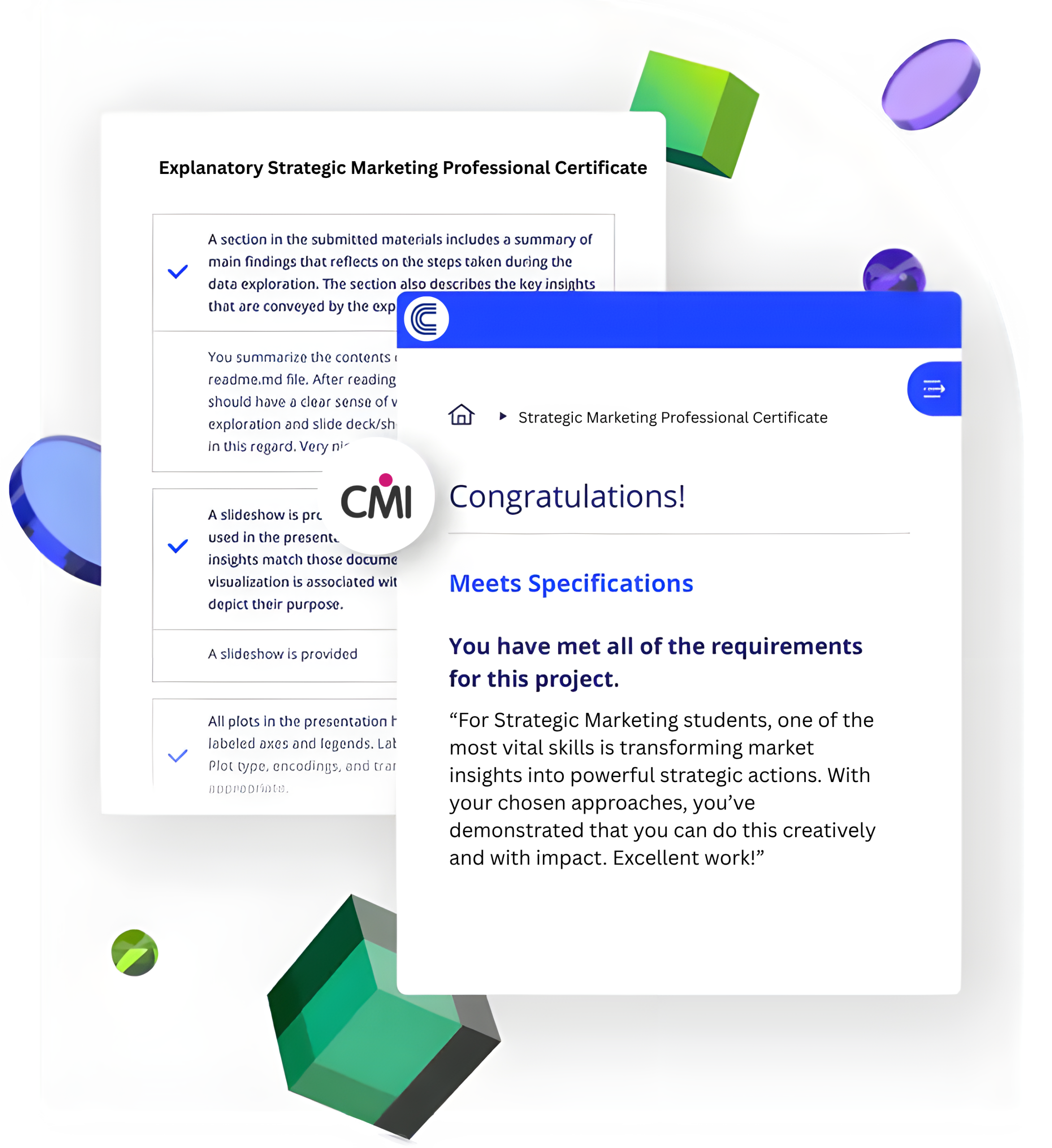
- Certification: CMI Certificate
Why Earn a CMI-Accredited Research for Strategic Development Certificate?
- Global Marketing Recognition: Achieve an internationally recognized Strategic Marketing Certificate that enhances your credibility as a marketing professional.
- Career Growth & Market Advantage: Develop strategic marketing skills proven to enhance organizational competitiveness and growth, setting you apart in the marketplace.
- Foundation for MBA: This Strategic Marketing Certificate covers 10% of the accredited MBA program requirements, making it a valuable graduate certificate stepping stone.
- Exclusive Digital Resources: Enjoy one-year of free access to ManagementDirect’s marketing research, campaign tools, data analysis, and digital marketing resources.
- Flexible & Supported Learning: Self-paced learning complemented by personalized expert sessions designed around your professional schedule.
Program Curriculum
Interactive lectures
-
Session 1
02:12:21 -
Session 2
02:06:22 -
Session 3
02:02:04 -
Session 4
02:02:19 -
Session 5
02:26:43
Unit 1:Marketing Fundamentals | Principles of Strategic Marketing
Develop a strong foundation in strategic marketing by understanding its principles and how they align with an organization’s broader objectives. This module emphasizes effective resource allocation, innovative product strategies, and relationship-driven marketing tactics.
-
Module Introduction
01:08 -
Unit Objectives
-
Lesson 1:Definition of Strategic Marketing – Index
-
Video
06:39 -
Lesson 1:What is Strategic Marketing?
-
Lesson 1:Phases in the strategic marketing planning
-
Lesson 1:Marketing mix strategy
-
Lesson 1:Implementation phase
-
Lesson 1:guidelines for strategic marketing planning
-
Lesson 1:Preparing a strategic marketing plan
-
Lesson 1:The importance of strategic marketing
-
Lesson 1:Difference between strategic marketing & a marketing strategy
-
Lesson 1:Strategic Marketing Planning- further reading
-
Lesson 1:Marketing Strategy- further reading
-
الدرس الأول: الاختبار
-
Lesson 2:Corporate Strategy VS. Marketing Strategy. – Index
-
Lesson 2:Corporate strategy VS Marketing strategy – Video
-
Lesson 2: Corporate strategy main tasks
-
Lesson 2: Corporate strategy main tasks – Allocation of Resources
-
Lesson 2: Corporate strategy main tasks – Organisational Design
-
Lesson 2: Corporate strategy main tasks – Portfolio Management
-
Lesson 2: Corporate strategy main tasks – Strategic Tradeoffs
-
Lesson 2: Levels of Strategies
-
Lesson 2: Vision, mission and objective of Companies
-
Lesson 2: Examples of the Best Mission Statements
-
Lesson 2: Examples of the Best Vision Statements
-
Lesson 2: Goals & Objectives
-
Lesson 2: The 7 Steps to Setting S.M.A.R.T.E.R. Goals
-
Lesson 2: Objectives
-
Lesson 2: Comparison between Goals & Objectives
-
Lesson 2: Strategies
-
Lesson 2: Business Strategy Vs Marketing Strategy – Video
-
Lesson 2: Quiz
-
Lesson 3: Market Research. – Index
-
Lesson 3: Integrated Marketing Process
-
Lesson 3: Stage1: Market Research
-
Lesson 3: key objectives of market research
-
Lesson 3: Market research importance
-
Lesson 3: Market Research Methods and Examples
-
Lesson 3: Types of Market Research- Primary market research
-
Lesson 3: Qualittive Vs. Quantitaive research
-
Lesson 3: Types of Market Research- Secondary Market Research
-
Lesson 3: Steps for conducting Market Research
-
Lesson 3: Quiz
-
Lesson 4:Designing Marketing Strategy – Index
-
Lesson 4:STP
-
Lesson 4:Segmentation
-
Lesson 4:Targeting
-
Lesson 4:Positioning
-
Lesson 4:STP Marketing (Segmentation, Targeting, Positioning) – Video
-
Lesson 4: The full STP model
-
Lesson 4: Define the market
-
Lesson 4: Create audience segments
-
Lesson 4: Construct segment profiles
-
Lesson 4: Evaluate the attractiveness of each segment
-
Lesson 4: Select target audience/s
-
Lesson 4: STP conclusion – Video
-
Lesson 4: Quiz
-
Lesson 5: The Marketing Mix – Index
-
Lesson 5:The Marketing Mix – Video
-
Lesson 5:The marketing mix definition
-
Lesson 5:The marketing mix – Product
-
Lesson 5:The marketing mix – Price
-
Lesson 5:The marketing mix – Place
-
Lesson 5:The marketing mix – Promotion
-
Lesson 5:Tools of Integrated Marketing
-
Lesson 5:Tools of Integrated Marketing – Mobile Marketing
-
Lesson 5:Tools of Integrated Marketing – Social Media Marketing.
-
Lesson 5:Tools of Integrated Marketing – Public Relations
-
Lesson 5:Tools of Integrated Marketing – Sponsorship
-
Lesson 5:Tools of Integrated Marketing – Advertising
-
Lesson 5:Tools of Integrated Marketing – Sales Promotion
-
Lesson 5:Tools of Integrated Marketing – Direct Marketing
-
Lesson 5:Tools of Integrated Marketing – Personal selling
-
Lesson 5:Brand communication
-
Lesson 5:People
-
Lesson 5:Process
-
Lesson 5:Physical Evidence
-
Lesson 5: Extended Marketing Mix (7P’s) | A-Level, IB & BTEC Business – Video
-
Lesson 5: Quiz
-
Lesson 6: Customer Relationship Management – Index
-
Lesson 6:CRM
-
Lesson 6:What is CRM Database?
-
Lesson 6:What is CRM Automation?
-
Lesson 6:CRM Automation software
-
Lesson 6:CRM Automation Benefits
-
Lesson 6:Applications on CRM – Video
-
Lesson 6: Quiz
-
Lesson 7 : E Marketing – Index
-
Lesson 7: E-marketing
-
Lesson 7: Internet Marketing: Definition and focus
-
Lesson 7: Digital Marketing: Definition & Aspect
-
Lesson 7: Factors applicable for almost all e-marketing scenarios
-
Lesson 7: E-Marketing “impact/trends/how to implement?” – Video
-
Lesson 7: A study on digital marketing: case study with special reference to amazon.com – Further readings
-
Final Exam Unit 1
unit 2:Marketing Strategy (Plan) | The Strategic Marketing Plan.
Learn how to create and execute a comprehensive marketing plan aligned with business objectives. This module covers competitive analysis, budgeting, branding, and the use of KPIs to measure success.
-
Unit Introduction
01:11 -
Unit Objectives
-
Lesson 1:Marketing Plan -Index
-
Lesson 1:marketing plan
-
Lesson 1:marketing plan – KEY Elements
-
Lesson 1:The marketing plan
-
Lesson 1:Marketing Plan vs. Business Plan
-
Lesson 1:Sample Marketing Plan Template – Further Readings
-
Lesson 1:Marketing plan VS marketing strategy – Further Readings
-
الدرس الأول: الاختبار
-
Lesson 2: Marketing Plan Audit – Index
-
Lesson 2: Marketing Plan Audit
-
Lesson 2: Marketing Audit Types
-
Lesson 2: Internal Variables
-
Lesson 2: Quiz
-
Lesson 3: Competitive Advantages – Index
-
Lesson 3: Examples of Competitive advantages – Video
03:30 -
Lesson 3: Examples of Competitive advantages
-
Lesson 3: Types of Competitive Positions
-
Lesson 3: The available alternatives for strategic behavior
-
Lesson 3: Examples of Competitive Position
-
Lesson 3: Quiz
-
Lesson 4: Key Performance Indicators – Index
-
Lesson 4: Key performance indicator
-
Lesson 4: KPI Meaning vs Metrics Meaning
-
Lesson 4: Why you need key performance indicators.
-
Lesson 4: Types of KPIs
-
Lesson 4: Developing the right KPIs
-
Lesson 4: KPI case study – Video
08:11 -
Lesson 4: KPI marketing – Further Readings
-
Lesson 4: Quiz
-
Lesson 5: Branding
-
Lesson 5: Introduction of Branding – Video
-
Lesson 5: Strategic Brand Management
-
Lesson 5: Key ingredients of customer based brand equity
-
Lesson 5:Brand Knowledge
-
Lesson 5:Brand Awareness
-
Lesson 5:Brand Image
-
Lesson 5: what is branding – Further Readings
-
Lesson 5: Brand and Branding – Further Readings
-
Lesson 5: Branding knowledge Brand building beyond product and service brand – Further Readings
-
Lesson 5: Quiz
-
Lesson 6: Budgeting – Index
-
Lesson 6: Strategic Brand Management
-
Lesson 6: The size of the marketing budget
-
Lesson 6: Strategic budgeting
-
Lesson 6: The focus of strategic budgeting
-
Lesson 6: Strategic Budgeting Process
-
Lesson 6: Marketing budget towards an effective marketing plan – Further Readings
-
Lesson 6: Free marketing budget templates – Further Readings
-
Lesson 6: Strategic Budgeting case study – Video
02:19 -
Lesson 6: Quiz
-
Lesson 7: Contingency Planning – Index
-
Lesson 7: Contingency planning
-
Lesson 7: Contingency planning seven steps
-
Lesson 7: Contingency Planning – Video
10:17 -
Lesson 7: Types of Contingency Plans
-
Lesson 7: Benefits of a Contingency Plan
-
Lesson 7: Example of a Contingency Plan
-
Lesson 7: Contingency FAQs
-
Lesson 7: Strategic Coherence definition
-
Lesson 7: Leadership Development
-
Lesson 7: Briefing Method with Example for good & bad briefing – Video
-
Lesson 7: Things to know about coronavirus contingency planning – Further Readings
-
Lesson 7: Coherence model between marketing culture and marketing effectiveness – Further Readings
-
Lesson 7: Top ten cultural risks global business – Further Readings
-
Lesson 7: Cultural Risks in Global Business – Further Readings
-
Lesson 7: Quiz
-
Lesson 8: Marketing Entry Strategies – Index
-
Lesson 8: Marketing Entries Strategies – Video
02:30 -
Lesson 8: Marketing Entry Strategies
-
Lesson 8: 9 main marketing entry strategies
-
Lesson 8: Waterfall Marketing
-
Lesson 8: Sprinkler market entry strategy
-
Lesson 8: The wave market entry
-
Lesson 8: Market entry strategies – Further Readings
-
Lesson 8: Market Share | A-Level, IB & BTEC Business – Video
-
Lesson 8: Quiz
-
Final Exam Unit 2
unit 3:Strategy (Strategic) Analysis | Strategic analysis methodologies.
Master strategic analysis tools to evaluate an organization’s market position and stakeholder expectations. This module includes macro and micro environmental scanning and advanced analysis frameworks.
-
Unit Introduction – Video
00:48 -
Unit Objectives
-
Lesson 1: Phases of Strategic Management – Index
-
Lesson 1: Phases of Strategic Management – Overview
-
Lesson 1: Four Phases of Strategic Management
-
Lesson 1: Case Studies
-
Lesson 1: Levels of Strategies with Persons Most Resposible
-
الدرس الأول: الاختبار
-
Lesson 2: Macro Environmental scanning – Index -Part One
-
Lesson 2: Environmental scanning
-
Lesson 2: How Macro Environmental scanning affect the marketing strategy and when to use each tools
08:29 -
Lesson 2: Macro Environment Factors
-
Lesson 2: Social and cultural forces
-
Lesson 2: SWOT Analysis
-
Lesson 2: SWOT analysis example
-
Lesson 2: PESTLE
-
Lesson 2: PESTEL analysis – Further Readings
-
Lesson 2: Porter 5 forces
-
Lesson 2: Porter 5 forces – Threat of New Entrants
-
Lesson 2: Porter 5 forces – Rivalry among Existing Firms
-
Lesson 2: Porter 5 forces – Threat of Substitute Products or Services
-
Lesson 2: Porter 5 forces – The Bargaining Power of Buyers
-
Lesson 2: Porter 5 forces – The Bargaining Power of Suppliers
-
Lesson 2: The Relative Power of Other Stakeholders
-
Lesson 2: competitive-analysis-frameworks- Further readings
-
Lesson 2: Macro Environmental scanning – Index -Part Two
-
lesson 2: Ansoff Matrix
-
Porter’s Five Forces – Video
-
Lesson 2: Ansoff Matrix -Market penetration
-
Lesson 2: Ansoff Matrix -Market Development
-
Lesson2: Ansoff Matrix -Product Development
-
Lesson2: Ansoff Matrix -Diversification
-
Lesson2: ANSOFF Matrix – Further readings
-
Lesson 2: Quiz
-
Lesson 3: Micro Environmental scanning – Index
-
Lesson 3: How to make Market research ? – Video
00:00 -
Lesson 3: Micro Environment definition
-
Lesson 3: Micro Environment Factors
-
Lesson 3: Market Research definition
-
Lesson 3: Market research importance
-
Lesson 3: Types of Market Research
-
Lesson 3: Primary Market Research
-
Lesson 3: Secondary research
-
Lesson 3: Steps for conducting Market Research
-
Lesson 3: Step #1: Define the Problem
-
Lesson 3: Step #2: Define the Sample
-
Lesson 3: Step #3: Carry out data collection
-
Lesson 3: Step #4: Analyze the results
-
lesson 3: How can researchers measure the obtained results?
-
Lesson 3: Step #5: Make the Research Report
-
Lesson 3: Step #6: Make Decisions
-
Lesson 3: Benefits of Efficient Market Research
-
Lesson 3: Primary vs. Secondary Data – Further Readings
-
Lesson 3 : Quiz 🧮
-
Lesson 4: Tools Of Analysis – index
-
Lesson 4: Tools of Analysis – Overview
-
Lesson 4: Porter’s Value Chain Analysis
-
Lesson 4: The firm’s primary activities
-
Lesson 4: How to Improve the Value Chain ?
-
Lesson 4: Market Share Analysis
-
Lesson 4: Market share analysis activites
-
Lesson 4: marketshare – Furether Readings
-
Lesson 4: Internal Surveys & Statistical
-
Lesson 4: The Theoretical Foundations of Employee Survey Research
-
Lesson 4: Employee survey research
-
Lesson 4: managing employee surveys – Further Readings
-
Lesson 4: Explanation with examples of Porter’s Value chain analysis in marketing – Video
-
Lesson 4: TWOS Analysis
-
Lesson 4: Explanation with examples of BCG analysis in marketing – Video
-
Lesson 4: BCG analysis
-
Lesson 4: The Use of the Growth-Share Matrix in Strategic Planning – Further Readings
-
Lesson 4: Life Cycle Analysis
-
Lesson 4: Life Cycle Analysis- 4 stages
-
Lesson 4: Resources analysis
-
Lesson 4: In-depth Resource Analysis with VRIO
-
Lesson 4: Definition of objectives and the scope of study
-
Lesson 4: Resources analysis – Video
-
Lesson 4: Strategic management 3 Resource analysis, competences – Further Readings
-
Final exam
unit 4:Consumer-Buyer Behavior (Consumer Psychology) | Consumer Behavior.
Gain insights into consumer behavior for both B2B and B2C markets. Understand the factors influencing purchasing decisions and loyalty while applying research methods and relationship marketing principles.
-
Unit Introduction
00:00 -
Unit Objectives
-
Lesson 1:Principles of Consumer Behavior – Index
-
Lesson 1: Introduction of consumer Behavior – Video
06:19 -
Lesson 1: Maslow’s Hierarchy of needs
-
Lesson 1: Why Maslow’s Hierarchy Of Needs Matters – Video
00:00 -
Lesson 1: Stages of Buying Process
-
Lesson 1: How exactly can you do that?
-
Lesson 1: A consumer behavior analysis should reveal
-
Lesson 1: consumer behavior analysis
-
Lesson 1: Factors that influence consumer behavior
-
الدرس الأول: الاختبار
-
Lesson 2:Types of Consumer Behavior – Index
-
Lesson 2: Complex buying behavior
-
Lesson 2: Dissonance-reducing buying behavior
-
Lesson 2: Habitual buying behavior
-
Lesson 2: Variety seeking behavior
-
Lesson 2: Consumer buyer behavior VS. Consumer markets
-
Lesson 2: The central question for marketers
-
Lesson 2&3: Quiz
-
Lesson 3: B2B buying behavior – Index
-
Lesson 3:B2B buying Behavior
-
Lesson 3: Social and professional influences
-
Lesson 3: The concept of loss aversion
-
Lesson 3: The status quo bias
-
Lesson 3: “Buying jobs”
-
Lesson 3: Early engagement
-
Lesson 3: How to Adapt Your B2B Sales Strategy
-
Lesson 3: Examples of B2B buying behavior – Video
-
Lesson 3: B2B buyers survey takeaways – Further Readings
-
Lesson 4:Customer loyalty and how to conduct relationship marketing – Index
-
Lesson 4: Customer Loyalty
-
Lesson 4: Why customer loyalty is essential
-
Lesson 4: Customer loyalty helps in effective planning.
-
Lesson 4: practical ways to make customers Happy
-
Lesson 4: Measuring loyalty
-
Lesson 4: Quiz
-
Lesson 5: Relationship Marketing – Index
-
Lesson 5: Relationship Marketing
-
Lesson 5: Relationship Marketing Principles
-
Lesson 5: Relationship Marketing & Customer Loyalty – Video
06:18 -
Unit Outro
-
Final Exam Unit 4
-
Final Exam Quiz
Strategic Marketing Assignment
-
Assignment
Awarding Body
Accredited by the Chartered Management Institute (CMI), a globally recognized UK awarding body for management excellence.
Learning Outcomes
Strategic marketing planning
Book A Session and Improve your skills!
Market analysis skills
Book A Session and Improve your skills!
Consumer behavior understanding
Book A Session and Improve your skills!
Brand management
Book A Session and Improve your skills!
International marketing
Book A Session and Improve your skills!
Digital marketing strategies
Book A Session and Improve your skills!
Social media marketing
Book A Session and Improve your skills!
Advertising and promotion
Book A Session and Improve your skills!
Sales management
Book A Session and Improve your skills!
Strategic decision-making
Book A Session and Improve your skills!
Related Programs

Sale!


Sale!


Frequently Asked Questions.
This program equips professionals with the tools to create, implement, and measure a strategic marketing approach using industry-relevant practices in brand strategy, marketing research, and customer engagement.
Unlike general marketing management courses, this program is fully focused on building a long-term, results-driven marketing strategy and includes applied training in digital marketing, data analysis, and campaign planning.
Yes. Whether you’re in digital marketing, advertising, or brand leadership, this program helps you align creative execution with a broader strategic plan and consumer insights.
Earning a Strategic Marketing Certificate not only enhances your marketing knowledge and practical skills but also serves as a graduate certificate stepping stone toward advanced study or leadership in marketing communications and beyond.
Testimonials
The Strategic Marketing Course breathed new life into my marketing approach. It masterfully combined theory with practical applications.
Jameela Al-Hassan
This course went beyond traditional marketing techniques, guiding us into the realm of strategic decision-making in marketing.
Rashid Al-Abbas
Understanding the bigger picture in marketing was always a challenge until I encountered the Strategic Marketing Course. Now, every campaign I run resonates with a strategic edge.
Noora Al-Mansoori
SMM's Strategic Marketing Certificate transformed the way I perceive brand campaigns. A definite must for every budding marketer.
Tariq Al-Mufti
Elevate Your Career